

The Minister of Youth On Constitutional Democracies and More
- The Monthly

- Jan 12, 2021
- 5 min read
Updated: Feb 11, 2021
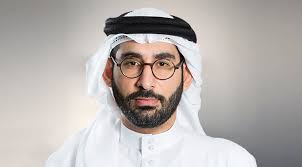
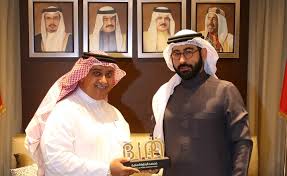
Read on below to see The Monthly’s riveting interview with Ayman Tawfiq Almoayyad, the Bahraini Minister of Youth and Sports Affairs, in which we discussed a wide variety of subjects in relation to Bahrain’s youth, from the importance of emotional factors in the success of young people, to the role of the youth in Bahrain’s democracy.
Beginning our interview, we found it extremely important to discuss the role of the Minister of Youth and how he contributes to the youth population in Bahrain. As we spoke, the Minister broke his role down into two main streams, ‘industrialisation and commercialisation of sports’ and ‘to be the spokespeople of the youth, for what they need, their empowerment, their key concerns and so on.’ As the interview continued, Mr Almoayyad spoke on his formula to effectively represent the youth. He detailed it as ‘create(-ing) an environment for them where they can feel safe, seen, supported, wanted, trusted and hopeful’ which he then continues on to say is measured and assessed ‘scientifically’. The Monthly interviewed the Minister of Youth because we wanted to discuss his importance to the youth of Bahrain, and how important the youth are to democracy, and public participation- and more specifically how the people in government reflect this importance in initiatives to assist the development of the youth. Continuing on with this concept, the Minister substantiated the thinking of the Ministry with the concept of C-PTSD (Complex Post Traumatic Stress Disorder) and how research behind it catalysed a “revolution in the ministry’s thinking…. we forgot about the emotional bits completely… so the internal agreement now is that the emotional aspect is equally as important”, reminding all of our readers how the government here in Bahrain focuses on emotional and physical uplifting of the youth.
When asked about the most difficult moment in his career, the Minister replied, ‘The most difficult thing that I’ve had to overcome in my career is trying to get buy-in on these seismic changes that we were making.’ To give us further detail, he divided the process of ‘buy ins’ into three distinct steps, trying to sell the idea to colleagues and friends, then proceeding to move theory to practice, and finally reminding yourself that you are not in this alone because ‘If you want some sort of sustainability, you need to have some sort of organisational cohesion around the plan.’ ‘Buy in’ is a political term that is defined as the willingness and acceptance to actively support and participate in something. Moreover, the Minister expressed that the most interesting initiative he has worked on was the difference between education and upskilling. He described education as a ‘very time-bound process’ and that it is ‘and old movement that has been tried and tested’, recognizing the importance of education that society has been aware of for a log time , however ‘upskilling is simply how you can teach somebody a skill in as short a duration as possible’. The example of the game-like language learning app Duolingo was used to explain the interesting nature of the brand new movement to educate the youth. He found upskilling and reskilling particularly interesting as it forces teachers to ‘figure out a way to find the easiest and most efficient way to teach’.
The Minister also spoke about the effects that the pandemic had on his work, explaining how the ministry was trying to aim for ‘more flexible operations’, and had all the resources for video conferencing a whole year before the pandemic. Mr Almoayyed explained how his team ‘migrated completely to the cloud in March 2019’. Although encouraging others to embrace this new form of communication, according to Mr Almoayyed, was something that they struggled with. However, the arrival of the lockdown caused this to change: ‘By February 2020, people were at home, but our work kept going… The pandemic gave everybody the nudge that we needed to see the benefits of these sorts of [online] meetings’, which demonstrates that although many difficulties arose from the pandemic, there’s always a silver lining.
Relating to this month’s theme of ‘Defending Democracy’, Bahrain is a special case; it has a very successful form of democracy known as a constitutional monarchy. The Minister’s personal opinion as to why this form of government works so well was based on short-term vs. long-term policy making: ‘In a Republic, stakeholders are looking at things in a very finite, definite time period. The problems that they would want to address would specifically stem from urgent matters that have a four-year or five-year lifecycle. Something that doesn’t seem like a red flag within the next four years won’t necessarily be addressed.’ Constitutional monarchies, on the other hand, have an indefinite time period. According to Mr Almoayyed, this allows them to focus on ‘generational impact’, instead of working on ‘four year cycles’; He states: ‘monarchies tend to do the right thing for the long-term, rather than just for today.’
This led on to the topic of the Stanford marshmallow experiment, a psychological study conducted in 1972. The researchers gave children a marshmallow, and told them that they could eat it immediately. However, if they waited to eat it for a certain period of time, they would be given a second marshmallow as well - this is known as ‘delayed gratification’. Researchers found that people that chose delayed gratification were more successful later on in their lives, whereas the people who wanted instant gratification were the ones who didn’t do as well in the future. How does this link to the benefit of a constitutional monarchy? The Minister said: ‘[Similar to the study,] the monarchy looks at [the country] from a very long-term perspective; if you wanted to do programs where you would not see results for a year or two, but you will 100% see after ten years, monarchies will be more willing to wait, whereas Republics are much more focused on the short-term perspective.’
Furthermore, he spoke on the importance of the youth in the democratic functions of a country. ‘To me, democracy simply means participation… If the youth has a cause that they feel very passionate about, then it is important that they voice their opinions and have open discussions about it.’ In addition, he detailed how his team’s role involves ‘shedding light’ on the Youth’s concerns, and allowing them to ‘cause change, create a ripple’.
Towards the end of the interview, the Minister shared a personal story, much to our enjoyment. He spoke about his son, and their interactions from which his son went onto his principal to present a proposal alongside a student petition, for equal amounts of time outside in the playground for older and younger kids. The Minister said “My point is that I didn’t need to teach him what democracy was, I already taught it to him in this manner.” This beautiful story inspired the interview team at The Monthly, and reminded us that democracy does not have to be confusing, complicated or extraneous: but rather standing up for what you believe in. We hope all of our readers find what they are passionate about, and always hold their ground. ‘Think of it like you’re a sail on a sailboat; the wind will only come and push you forward if you’re in the right direction. So if you’re aiming north, then the wind will come.’ Finishing off with this, we hope all of our readers center themselves in the right direction, and work with the wind to reach their destination.


Comments