

Beyond BSB Features Dominic McPollin and Sustainable Energy
- The Monthly

- Apr 2, 2021
- 4 min read
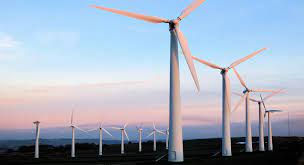
Underneath the blazing Bahraini sun, we all seek refuge within pristine air-conditioned buildings - often without a second thought. Yet, behind the cool breeze sheltering us from the harsh climate slithers an emerging villain: Carbon Emissions. Another looming miscreant that presents itself in the form of Carbon Dioxide accounts for approximately 76% of total greenhouse gases. Now a familiar enemy, greenhouse gases do not hesitate to leave a trail of destruction in their wake, prompting rapid climate change, increasing devastating wildfires, and triggering food supply disruptions. Unfortunately, we only get one Earth and the impending detriments of climate change serve as an increasing issue every day. However, much to our benefit, activists such as Dominic McPollin strive to endorse sustainable energy and aid the world in preserving the finite resources that we possess.
Armed with two degrees and an astounding 31 years of service to Bahrain, guest speaker Dominic McPolin has toured the world with his expertise in countries such as Ireland, Germany, Iraq and the UK. Currently employed by the Ministry of Works - an essential part of Bahrain's infrastructure since 1975 - Mr McPolin works as the Chief of the Central Planning Office with a responsibility of coordinating all infrastructure projects, allowing us to relish the highest standards of living. While a vital asset to ensuring a smooth framework of Bahrain, being Chairman of the District Cooling committee leaves him in charge of progressive Sustainable Energy Plans launching Bahrain into a cleaner future. As the perilous effects of climate change start gripping the Middle East, Mr McPolin’s department has fixated upon pressing concerns of insufficient cooling methods harming our community. To battle the growing threats of carbon emissions and maximise efficiency, Mr McPolin maintains the urgency of cracking barriers to innovation of newer, more sustainable technologies, and guarantees hard work will allow the Kingdom of Bahrain to challenge climate disasters.
Throughout the indispensable lecture, a noticeable emphasis was placed on the cruciality of maintaining a positive frame of mind when examining the prospect of a sustainably run world, as Mr. McPolin prefaced the technical content of the lecture by affirming that ‘a pessimist sees a problem in every opportunity’, whereas an ‘optimist sees an opportunity in every problem’. The lecture then proceeded to outline the basics of renewable energy and naming specific examples, including solar, wind, hydro, tidal, geothermal, and biomass energy. The importance of zero-carbon or low-carbon energy sources, such as nuclear power, is also expressed, as they are believed to play a large role in enabling Britain to reach a net zero carbon emission status. In keeping with his optimistic outlook on the matter of sustainable energy, Mr. McPolin effectively highlighted the feasibility of achieving high levels of clean energy globally by mentioning the 7 countries (Iceland, Paraguay, Costa Rica, Norway, Austria, Brazil, Denmark) that already operate on, or very near to, 100% renewable power, and outlining a number of goals and plans that many major carbon-emitting countries have set into motion to reduce carbon emissions, with a major aim being to reach the desired level of zero net carbon emissions.
As the enticing lecture proceeded, Mr McPolin discussed an evidently significant factor of Bahrain’s continual efforts to promote energy efficiency through the Sustainable Energy Authority(SEA). The SEA is a key organisation dedicated to implementing policies and initiatives that will ensure maximum sustainability within the Kingdom of Bahrain. Notably, the League of Arab States, Arab Ministerial Council for Electricity mandated that “Each Arab State shall adopt a National renewable Energy Plan (NREAP). Each of the member states shall develop a National Energy Efficiency Action Plan (NEEAP).” To date, the Kingdom of Bahrain cabinet order 8/2384 has endorsed both NREAP and NEEAP. Additionally, in further inclinations to support Bahrain’s implementation of effective policies, the Sustainable Energy Unit was established by Cabinet resolution 4/2238. The informative lecture noted that “The unit will consolidate the efforts of the institutions in the energy sector and institutionalise energy planning as well as promote renewable energy and energy efficiency.” The SEU endeavours to develop sustainable energy policies and set realistic goals, including: developing the NEEAP and NREAP. With knowledge comes the power of change. So, under guidance of the SEA we can be confident that change is near.
Mr McPolin explained that 24 countries worldwide have announced zero carbon emission target dates. This is a sign that, as a global community, countries are actively striving towards an improved quality of environment. Countries like Iceland, Paraguay, and Costa Rica are currently at 100% renewable power, whilst the USA has announced its goal to reach a target of 100% clean energy by 2035. It is evident that, for the first time ever, nations are prioritising their contribution to having an energetically efficient planet. Fuels such as gasoline and diesel, which, in recent years, have had a detrimental impact on our atmosphere, are being gradually banned. In fact, Mr McPolin said that by 2040, at least 7 different countries will have completely eradicated the use of gasoline and diesel in cars. After viewing first-hand the effects of climate change and pollution, the world is slowly gaining a newfound appreciation for our Earth and it’s resources. This increase in awareness about the effects of using certain resources has led companies such as Allianz SE, which is currently one of the biggest reinsurance companies in the world, to announce that by 2050, they will no longer insure fossil fuel-based assets. Therefore, along with educating students about the climate crisis and sustainability, Mr McPolin was able to end his lecture with a note of hope, leaving us with the understanding that if we continue to spread awareness and actively make changes to both our lifestyle and the resources we consume, we can save our planet.
By Charlotte Rodney 12E, Manaal Khan 11B, Rose Baslious 12F and Tamara Almoayed 12F


Comments